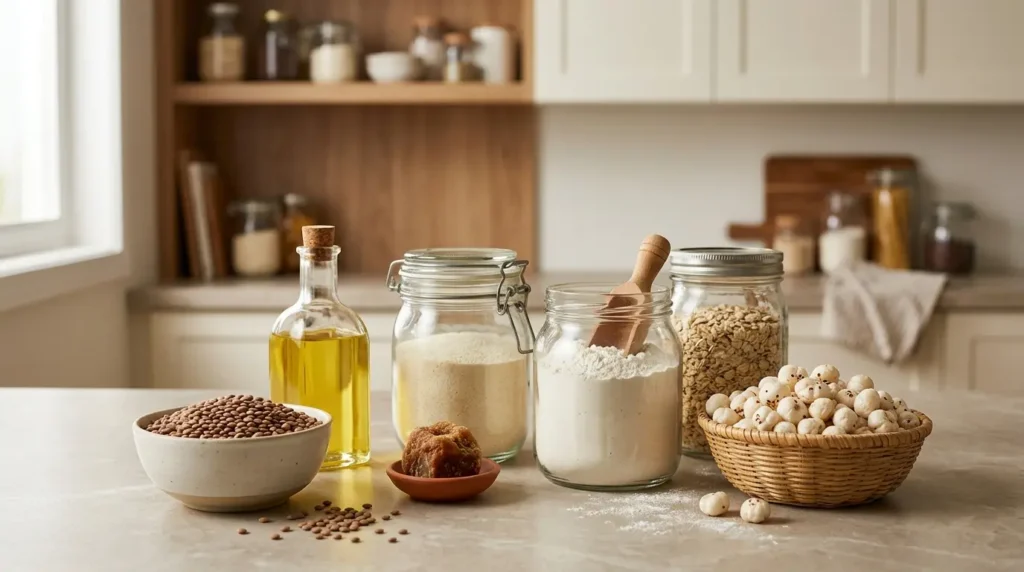
Pantry planning works best when every ingredient has a clear role. Rather than accumulating whatever looks useful at the store, it helps to think about what you actually cook, how often, and which ingredients show up across multiple meals rather than sitting unused. A practical pantry tends to fall into a handful of categories — protein-rich cooking staples, grains and flours, oils, sweeteners, and a few quick snacks — each doing a specific job. This guide walks through those categories and how to think about building a pantry around what you’ll genuinely use.
What Actually Makes a Good Pantry Staple?
Not every shelf-stable food deserves a permanent spot in the pantry. The ones worth keeping tend to share a few practical qualities: they get used regularly, work across more than one type of dish, store reasonably well when handled properly, and stay familiar enough that they don’t end up forgotten at the back of a shelf.
A good staple also tends to be flexible. Something that only works in one specific recipe is harder to justify keeping on hand than an ingredient that can move between a quick weeknight dinner and something more involved on the weekend.
Start With Lentils and Pulses
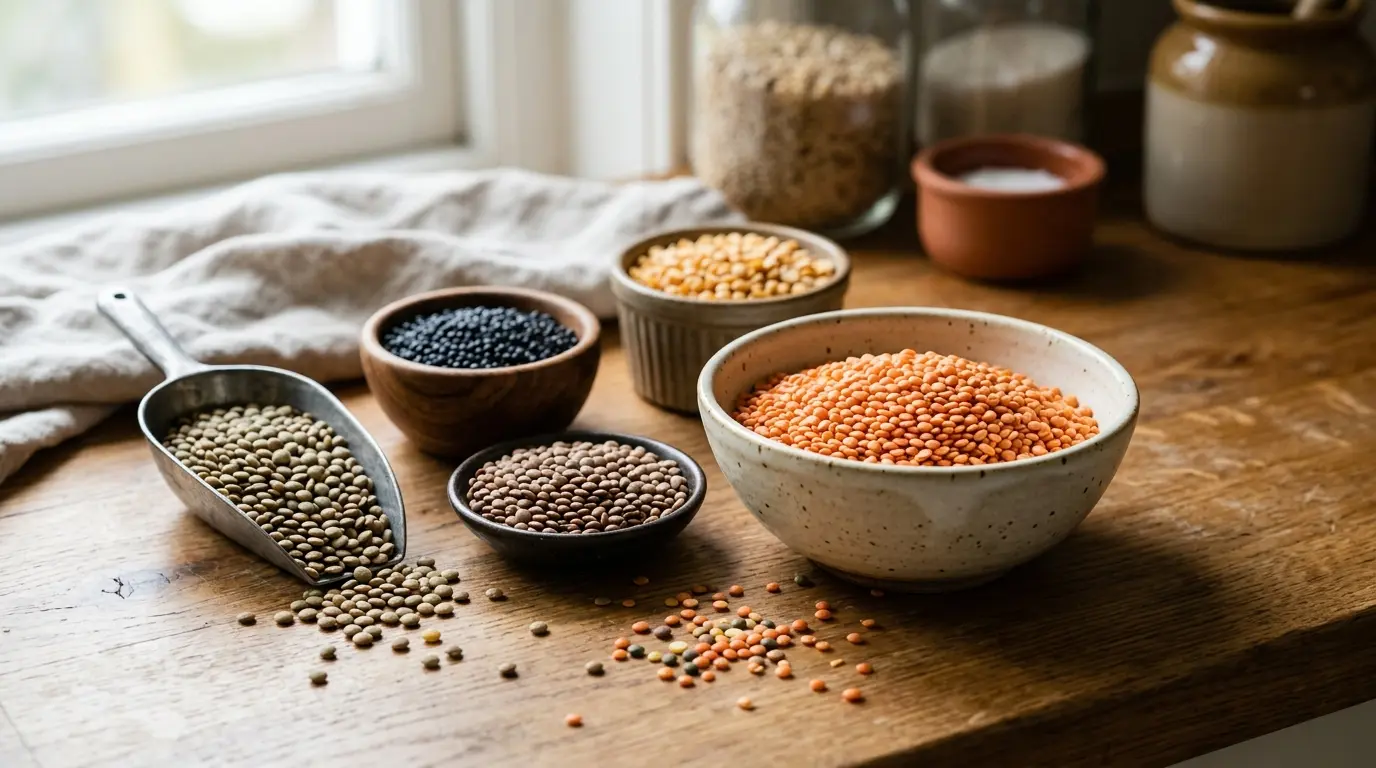
Lentils are a reasonable place to begin, mainly because of how differently the various types behave. Red lentils soften quickly and work well in soups and thinner dals. Green and black lentils hold their shape and suit salads or side dishes. Brown lentils sit somewhere in the middle, useful for everyday stews and mixed dishes.
Keeping two or three varieties on hand, rather than just one, gives more flexibility than it might seem — a soft, quick-cooking lentil for a weeknight soup and a firmer variety for something that needs to hold together are genuinely different tools, not interchangeable versions of the same ingredient.
Keep the Right Flour for the Way You Cook
“Flour” isn’t a single ingredient, even though it’s often treated as one on a shopping list. Different flours behave differently depending on what they’re going into — everyday bread, baking, batters, or thickening a sauce all call for slightly different properties.
Rather than keeping a single all-purpose bag and hoping it works everywhere, it’s worth matching the flour to what you actually cook most often. Someone who bakes regularly has different needs than someone who mostly uses flour for flatbreads or batters, and the right choice depends more on your own kitchen habits than on any general rule.
Add a Versatile Cooking Oil
A good cooking oil earns its place through frequency of use more than anything else. What matters practically is the cooking method it needs to support — quick high-heat cooking, slower simmering, or dishes where the oil’s own flavour plays a role — along with a package size that matches how much your household actually goes through before it’s used up.
There isn’t one oil that’s universally “better” than the rest; the right choice depends on how you cook and what you’re making. Keeping one versatile everyday oil on hand, sized appropriately for your household, is usually more useful than several specialty oils that see occasional use.
Keep a Familiar Sweetener for the Recipes You Actually Make
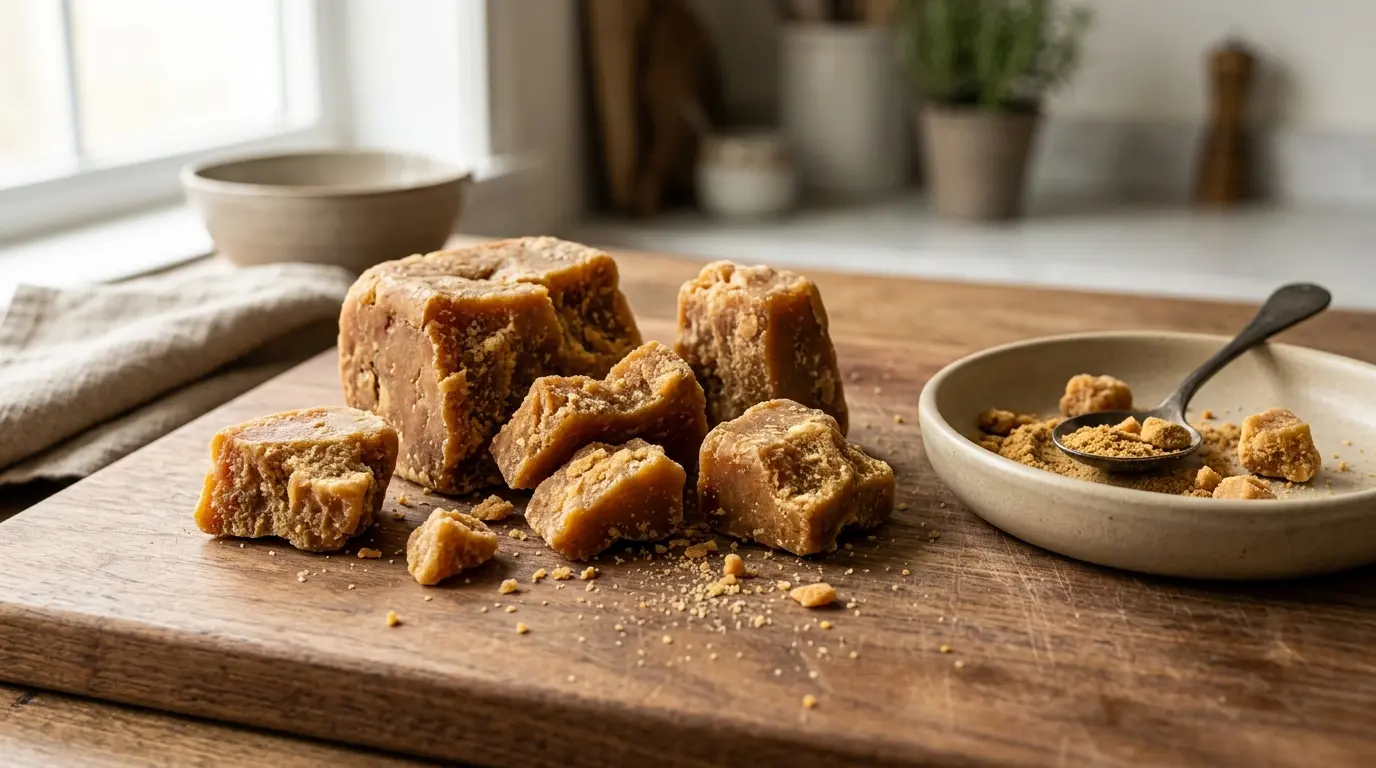
Not every recipe calls for the same kind of sweetness, and jaggery is a good example of an ingredient that serves a different role than plain sugar. Its deeper, caramel-like flavour and denser texture suit certain dishes — traditional sweets, some savoury preparations where a touch of sweetness balances spice, or recipes where its flavour is meant to come through rather than disappear.
Keeping one familiar sweetener like this on hand, alongside regular sugar, gives more range in the kitchen without needing a full shelf of specialty sweeteners that rarely get used.
Include One or Two Quick Snack Staples
A pantry doesn’t need to be full of snacks, but a couple of reliable, shelf-stable options are genuinely useful — for putting something together quickly, for serving guests without notice, for pairing with tea or coffee, or simply for avoiding a last-minute grocery run.
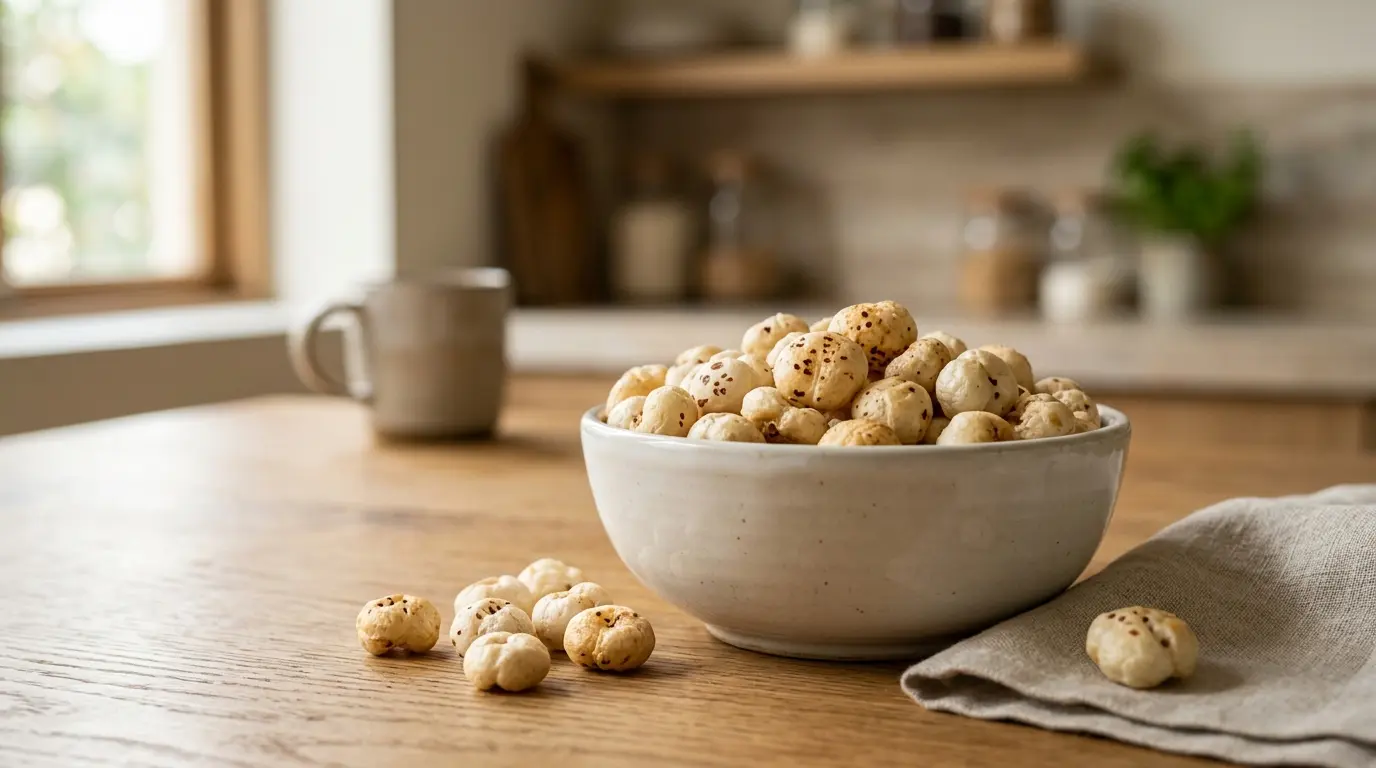
Makhana and roasted channa are common examples: both keep well, require little to no preparation, and work in a variety of simple, everyday situations. The goal here isn’t to stock up on snack food generally, just to have a couple of dependable options rather than none.
Don’t Forget Flexible Ingredients Like Sooji
Sooji, also known as semolina, is coarsely milled wheat, and it’s a genuinely flexible pantry ingredient once you know what to do with it. It shows up in breakfast dishes, certain savoury preparations, desserts, and some baked goods, depending on how it’s used and prepared.
Naming and grain specifications for sooji can vary somewhat between products, so it’s worth checking the package if a specific recipe calls for a particular grind or type. As a category, though, it’s a useful ingredient to keep around precisely because it isn’t limited to one kind of dish.
Think in Categories, Not Random Products
Pantry planning gets easier once you stop thinking about individual products and start thinking in functional categories.
Base ingredients
Flours, grains, and lentils — the foundation most meals are built around.
Cooking essentials
Oils, seasonings, and other basics used in nearly everything you cook.
Flexible ingredients
Items like sooji or jaggery, which don’t anchor every meal but add real range when you need them.
Quick-use foods
Shelf-stable snacks like makhana or roasted channa, kept on hand for convenience rather than daily use.
Thinking this way helps avoid duplicate purchases and makes it easier to notice what’s actually missing from your pantry, rather than just buying whatever catches your eye.
Buy What You Will Actually Use
A bigger pantry isn’t automatically a better one. How much of any given staple makes sense depends on household size, how often you cook a particular type of dish, the package size available, and how much storage space you realistically have.
Buying in bulk can make sense for something used constantly, but it isn’t a universal strategy. An ingredient that only gets used occasionally is often better bought in a smaller quantity, even if the larger size looks like better value on paper — unused stock sitting in the back of a cupboard isn’t actually saving anything.
Storage Matters as Much as Selection
Choosing the right staples only pays off if they’re stored properly once they’re home. A few habits apply across most dry pantry goods:
- Keep items in a cool, dry place, away from direct heat and moisture.
- Use sealed, airtight containers once a package has been opened.
- Hold onto package information and best-before dates rather than discarding them.
- Rotate older stock to the front so it gets used before newer purchases.
- Follow any product-specific storage instructions printed on the package, since these can vary by ingredient.
None of this requires special equipment — mostly just consistent habits.
How to Build a Pantry in Layers
One practical way to organize pantry buying is to think in layers, starting with what you use most.
Layer 1 — Everyday basics
Items used several times a week: your primary lentil, main flour, and everyday cooking oil.
Layer 2 — Regular cooking ingredients
Products used weekly or across recurring recipes, like a second lentil variety or a specific flour for baking.
Layer 3 — Flexible extras
Ingredients like jaggery or sooji that add range without being used daily.
Layer 4 — Snacks and seasonal items
Shelf-stable snacks and occasional-use products, kept in smaller quantities and restocked based on actual demand rather than habit.
Building outward from Layer 1 tends to produce a more useful pantry than trying to stock everything at once.
A Simple Pantry Starting Point
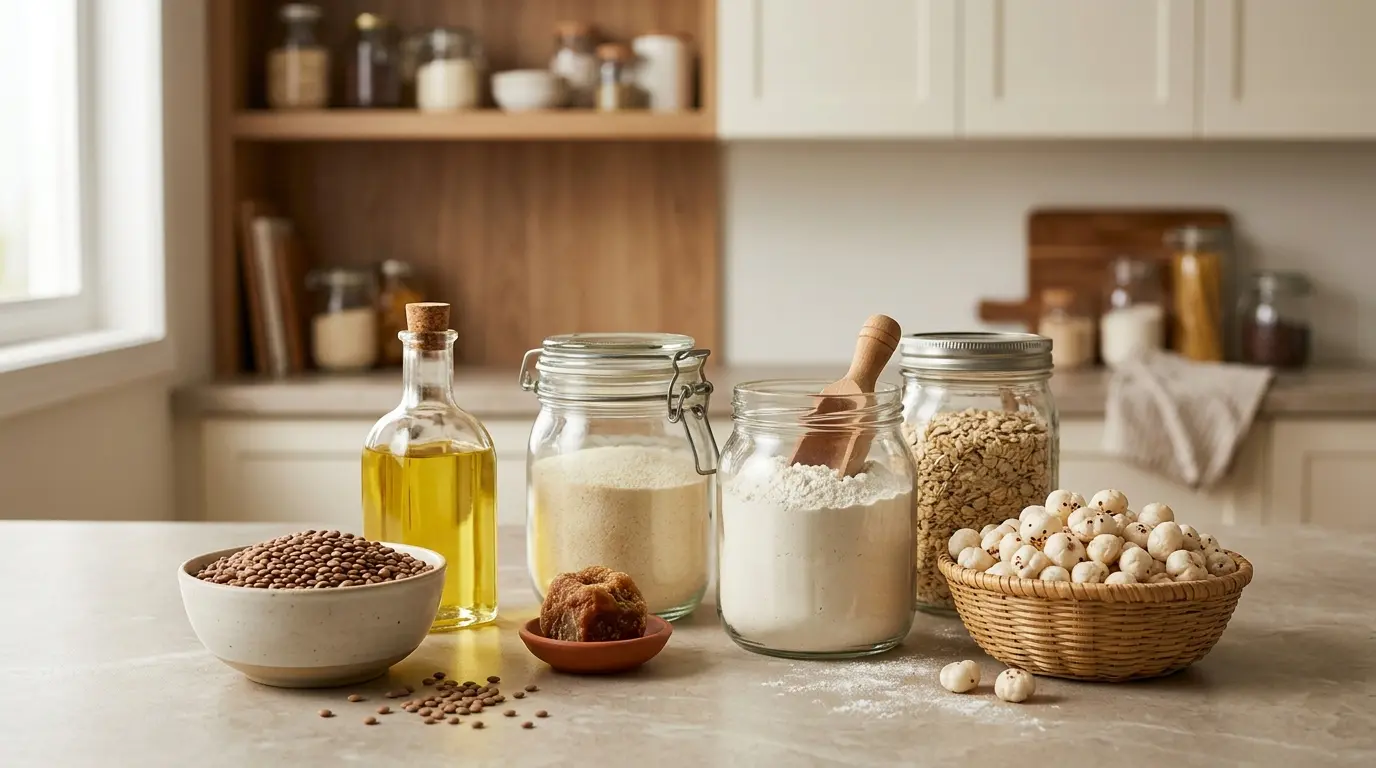
For anyone building a pantry from scratch, a reasonably compact starting list might include:
- One or two lentil or pulse varieties
- A flour suited to your most common cooking or baking
- One versatile cooking oil
- One familiar sweetener, such as jaggery
- Sooji or another flexible dry ingredient
- One or two shelf-stable snacks
- A small set of frequently used seasonings
- Any household-specific essentials particular to how you cook
This is intentionally short. The point isn’t to check every box at once, but to build around what you’ll genuinely reach for.
The Gyan Foods Approach to Everyday Staples
Gyan Foods’ range has grown around this same idea — that a pantry, and a product catalogue, should be built around what people actually use rather than how large it can get. The company started with a smaller selection based in Alberta, and the range expanded as customers and retail partners asked for more, category by category, rather than all at once.
Today, Gyan offers more than 400 SKUs and growing, spanning lentils, flours, jaggery, snacks, cooking oils, bakery items, and other kitchen essentials. The focus throughout has stayed on everyday usefulness, consistent quality, and familiar taste — the same qualities worth looking for when building a pantry of your own.
Frequently Asked Questions
What are pantry staples? Pantry staples are shelf-stable or regularly stored ingredients used frequently across everyday meals — things like lentils, flour, cooking oil, and other basics that form the foundation of regular cooking.
How many pantry staples should you keep? There’s no fixed number. It depends on household size and cooking habits, but a smaller set of ingredients you actually use consistently is more useful than a large collection that mostly sits unused.
How do you avoid overstocking a pantry? Buy quantities that match how often you use an ingredient, pay attention to package size relative to your household’s needs, and avoid bulk purchases for items used only occasionally.
How should dried pantry foods be stored? In a cool, dry place, in airtight containers once opened, following any package-specific storage guidance and rotating older stock to the front.
Which pantry ingredients are the most versatile? Lentils, flour, and cooking oil tend to offer the most everyday versatility, since they show up across a wide range of dishes rather than being limited to one type of recipe.
How often should pantry products be checked? Periodically, especially opened packages, to check for moisture exposure, best-before dates, and whether older stock should be used before newer purchases.
What pantry staples are useful for quick meals? Quick-cooking lentils, a versatile flour, and a couple of shelf-stable snacks like makhana or roasted channa are useful for putting something together without much notice.