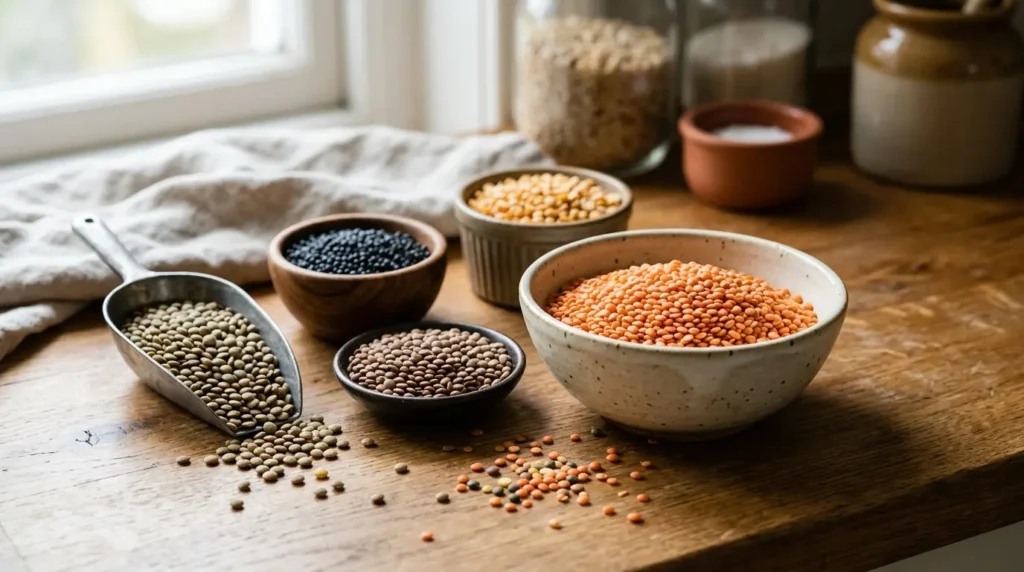
Walk down the lentil section of most grocery stores and you’ll find a surprising number of options: red, brown, green, black, whole, split, sold under names that don’t always explain themselves. The differences aren’t cosmetic. Colour, whether a lentil is whole or split, and whether its outer skin has been removed all affect how long it takes to cook, what texture it ends up with, and what kind of dish it’s actually good for. This guide breaks that down so choosing the right one takes less guesswork.
What Are Lentils?
Lentils are small, disc-shaped edible seeds from the Lens culinaris plant, a member of the legume family. They’re sold dried, come in several colours and sizes depending on variety, and cook into textures ranging from soft and creamy to firm and intact, depending on the type and how they’re prepared.
Lentils are one of several kinds of pulses — dried seeds from legume plants — grown and eaten around the world. What sets them apart from other pulses like chickpeas or beans is mainly size and cooking speed: lentils are smaller and generally cook faster, without an overnight soak, which is part of why they’re such a common everyday ingredient.
Lentils, Pulses and Dal: What’s the Difference?
These three words get used loosely, and it helps to untangle them.
Pulse is the umbrella term. It covers the dried, edible seeds of legume plants — lentils, chickpeas, dried peas, and beans of various kinds all fall under this category.
Lentil refers specifically to Lens culinaris and its varieties — red, brown, green, black, and others discussed below.
Dal (also spelled daal or dhal) is a term used in Hindi and several other South Asian languages, and it does double duty. It can refer to a category of split pulses sold in stores — which may or may not be lentils — or to a cooked dish made from those pulses. This is where confusion tends to start. A package labelled “dal” might contain split red lentils, but it might just as easily contain split chickpeas, split pigeon peas, or split mung beans, none of which are botanically lentils. The safest approach when shopping is to check the specific pulse named on the package rather than assuming “dal” always means lentil.
Whole vs Split Lentils
Beyond colour, one of the biggest differences between lentil products is whether they’re sold whole or split.
Whole lentils still have their outer skin intact. They generally hold their shape better during cooking and take a bit longer to soften, since the skin slows down water absorption.
Split lentils have been mechanically split in half, usually after the outer skin is removed. With the skin gone and the seed divided, they absorb water faster and cook down more quickly, often breaking apart into a softer, more even texture. This is why split lentils are common in soups, purees, and thicker dal-style dishes, while whole lentils show up more often in salads, side dishes, or anywhere a firmer bite is wanted.
Removing the skin also changes appearance. A whole lentil and its split, skinned counterpart can look quite different, even though they came from the same seed.
Common Types of Lentils and How They’re Used
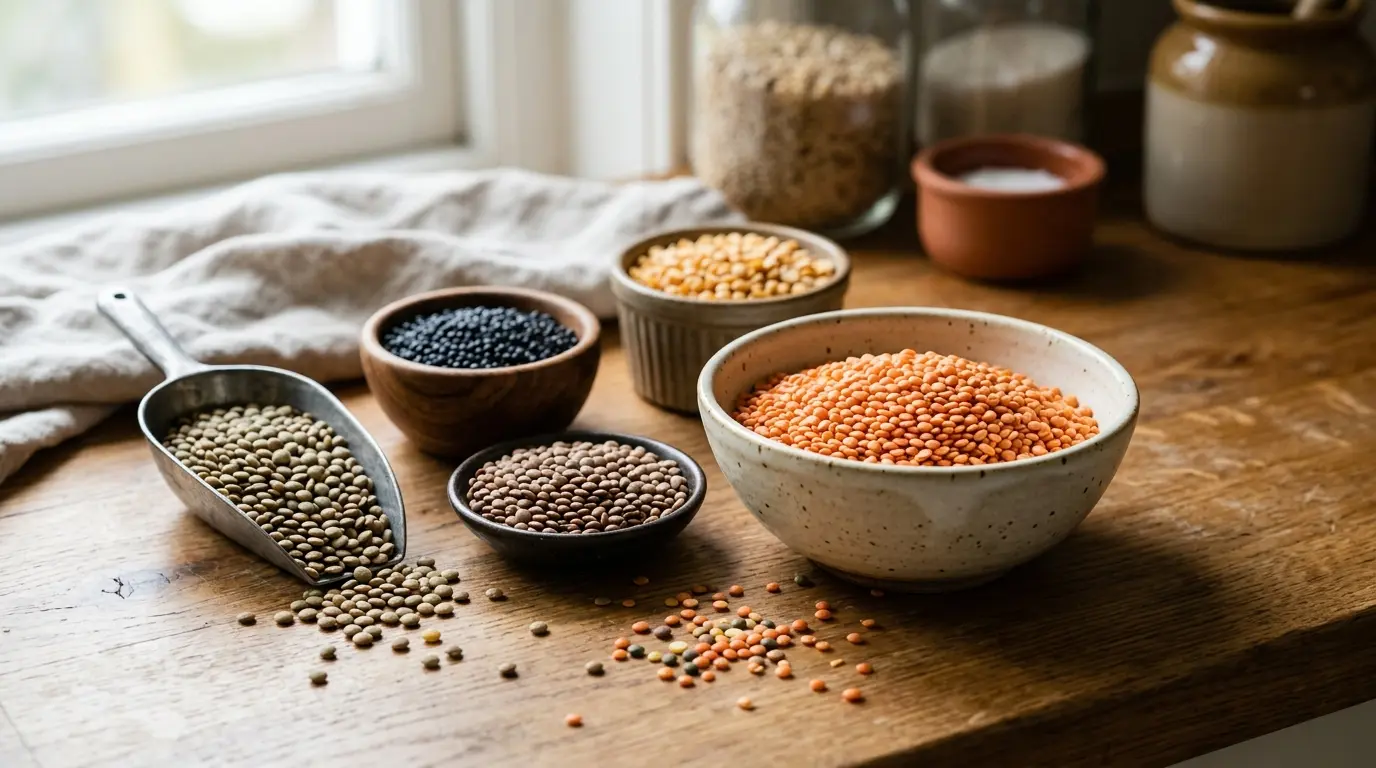
Red Lentils
Usually sold split and skinned, red lentils are pale orange to salmon-coloured and cook faster than most other varieties. They soften quickly and tend to break down into a soft, slightly thick texture rather than holding a distinct shape, which makes them a good fit for soups, purees, and quicker weeknight dals.
Brown Lentils
The most commonly used everyday variety in many kitchens. Brown lentils cook at a moderate pace and hold some structure while still becoming tender, depending on how long they’re simmered. Their balanced texture makes them genuinely versatile — soups, stews, side dishes, and mixed grain bowls all work well with brown lentils.
Green Lentils
Slightly firmer than brown lentils, green lentils are known for holding their shape well even after a full cook, which makes them a good choice for salads, grain bowls, or any dish where you don’t want the lentils to turn mushy.
Black Lentils
Small, dark, and round, black lentils — sometimes called beluga lentils because of their resemblance to caviar — hold their shape particularly well and have a firmer bite than red or brown varieties. It’s worth noting that “black lentil” is sometimes used loosely in stores to describe whole urad (black gram), which is a different pulse entirely, not a true botanical lentil. Checking the specific product name helps avoid mixing the two up.
Yellow Split Pulses
Yellow split products in the lentil aisle are a common source of confusion. Some are genuinely split lentils, but many yellow split pulses sold alongside lentils — including yellow split moong and certain split pea products — belong to different plant species. They cook similarly in some respects but aren’t interchangeable in every recipe, so it’s worth checking the product name rather than assuming everything yellow and split is the same ingredient.
Other Common Dal and Pulse Varieties
A few other pulses regularly appear alongside lentils in grocery aisles and recipes, and it’s useful to know they aren’t technically lentils:
- Moong (mung bean) — small and green when whole, pale yellow when split and skinned; cooks quickly and softens easily.
- Urad (black gram) — sold whole or split; whole urad has a dark skin, while split urad without skin is white.
- Chana dal — split, skinned chickpeas; firmer than most lentils and holds its shape well.
- Toor or arhar (pigeon pea) — a staple in many South Asian kitchens, usually sold split, with an earthy flavour and moderate cooking time.
None of these are botanically lentils, even though they’re often shelved and cooked in similar ways.
Comparison at a Glance
| Variety | Texture When Cooked | Holds Shape? | Common Uses |
|---|---|---|---|
| Red lentils (split) | Soft, breaks down easily | No | Soups, purees, quick dals |
| Brown lentils | Tender, moderately firm | Somewhat | Everyday soups, stews, side dishes |
| Green lentils | Firm, holds together | Yes | Salads, grain bowls, side dishes |
| Black lentils (beluga) | Firm, slightly chewy | Yes | Salads, grain bowls, garnishing dishes |
| Yellow split pulses | Soft to moderately soft | Varies by product | Soups, dals, thicker preparations |
Cooking times vary by batch, pan, and heat level, so treat this as a general guide rather than a fixed rule.
Which Lentil Should You Choose?
For soups and soft dishes: red lentils or other split, skinned varieties work well, since they break down naturally and thicken the liquid as they cook.
For thicker, dal-style dishes: split lentils or split pulses like moong or toor are common choices, since a softer, more blended texture is usually the goal.
For salads or dishes where shape matters: green or black lentils are a better fit, since they hold together after cooking instead of turning mushy.
For hearty stews: brown lentils are a reliable middle ground, contributing body to the dish while still softening enough to eat comfortably.
For quick, everyday cooking: red or brown lentils are generally the fastest and most forgiving, needing less attention than firmer varieties.
Do Lentils Need to Be Soaked?
Not always. Most lentils, unlike many beans, cook in a reasonable amount of time without soaking, which is part of their appeal as a weeknight ingredient. That said, soaking practices vary. Whole lentils, because they still have their skin, may benefit from a short soak if a faster or more even cook is the goal. Split lentils generally need less or no soaking at all, since they’ve already been processed to cook quickly. When a specific recipe or package calls for soaking, it’s worth following that guidance rather than applying one rule to every variety.
Should You Rinse Lentils Before Cooking?
Yes, as a general habit. Rinsing dried lentils under cool water before cooking helps remove any dust or loose particles picked up during processing and packaging. It’s also a chance to check the lentils and remove any small stones or debris, which occasionally turn up even in well-processed batches. This isn’t a sign of poor quality; it’s a normal part of preparing dried pulses, and a quick rinse and visual check only takes a minute.
How to Cook Lentils Without Losing the Texture You Want
A few habits make a noticeable difference:
- Use enough liquid, but not so much that the lentils are swimming; too much water can pull flavour out rather than into the dish.
- Control the heat. A gentle simmer cooks lentils more evenly than a hard boil, which can break firmer varieties apart before they’re fully tender.
- Check texture as you go, especially with firmer varieties like green or black lentils, where a minute or two of extra cooking can be the difference between al dente and mush.
- Add salt and acidic ingredients (like tomatoes or vinegar) thoughtfully. Adding them too early in the cooking process can sometimes slow down softening, particularly with whole lentils.
- Remember that no single cooking time fits every variety. Red lentils might be ready in well under half an hour, while whole or firmer varieties can take noticeably longer.
How to Store Dried Lentils
Dried lentils store well, but a few habits help maintain quality:
- Keep them in a cool, dry place, away from direct heat and humidity.
- Use a sealed, airtight container once a package has been opened, rather than leaving it loosely closed.
- Check and follow the best-before date and any storage guidance printed on the package.
- Use older stock before newer stock when restocking your pantry, so nothing sits unused for an extended period.
Properly stored dried lentils have a long shelf life, but flavour and cooking consistency are generally best when they’re used within a reasonable time rather than kept indefinitely.
What Should You Look for When Buying Lentils?
A few practical checks help when choosing a lentil product:
- Packaging integrity — a torn or poorly sealed bag is one of the easiest ways for moisture or pests to get in before the product even reaches your kitchen.
- Consistent appearance — some natural variation in size and colour is normal, but a package should generally look uniform for its stated variety.
- Clear product labelling — since names like “dal” can cover several different pulses, checking the specific variety on the label avoids confusion at the recipe stage.
- A source you trust — as with most pantry staples, consistent sourcing and handling tend to show up in how predictably the product cooks.
Minor natural variation in size or shade isn’t a defect. Lentils are an agricultural product, and some batch-to-batch variation is normal.
Why Consistency Matters in Everyday Pantry Products
Lentils are the kind of ingredient people buy repeatedly, often without thinking too hard about it, because they expect the same cooking time and texture each time. When that consistency holds, a lentil becomes a dependable part of a weekly routine rather than something that requires re-learning each time it’s cooked. That kind of dependability comes down to careful sourcing and steady processing standards behind the scenes, even though it’s not something most shoppers see directly.
Lentils in the Gyan Foods Range
Lentils are part of Gyan Foods’ broader range of everyday pantry staples, which spans flours, jaggery, cooking oils, snacks, bakery products, and more than 400 SKUs and growing. As with the rest of its catalogue, Gyan works with selected producers and trusted manufacturing partners when developing its product range, with a focus on consistency and familiar cooking results from one purchase to the next.
The intent isn’t to reinvent how lentils are used, but to make an ingredient many households already rely on easy to find in a form that performs the way it’s expected to, batch after batch.
Frequently Asked Questions About Lentils
What is the difference between lentils and dal? Lentils are a specific type of pulse from the Lens culinaris plant. Dal is a broader South Asian term that can refer to various split pulses sold in stores, including but not limited to lentils, or to a cooked dish made from them.
Which lentils cook the fastest? Split, skinned varieties like red lentils generally cook the fastest, since removing the skin and splitting the seed speeds up water absorption.
Which lentils hold their shape best? Green and black (beluga) lentils are known for holding their shape well after cooking, making them a good choice for salads and grain bowls.
Do lentils need to be soaked before cooking? Not always. Most lentils cook in a reasonable time without soaking, though whole lentils may benefit from a short soak, and specific recipes may call for it.
Should you rinse lentils before cooking? Yes, as a general habit. Rinsing removes dust and loose particles and gives you a chance to check for any small stones or debris.
Why do some lentils become mushy? Split, skinned varieties like red lentils are designed to break down as they cook, which is useful for soups and purees but not ideal when shape retention matters.
How should dried lentils be stored? In a cool, dry place, in a sealed container once opened, following the best-before date and storage guidance on the package.
Can different lentils be substituted for one another? Sometimes, but not always without changing the dish. Firmer varieties like green or black lentils won’t break down the way red lentils do, so swapping one for another can change the final texture significantly.